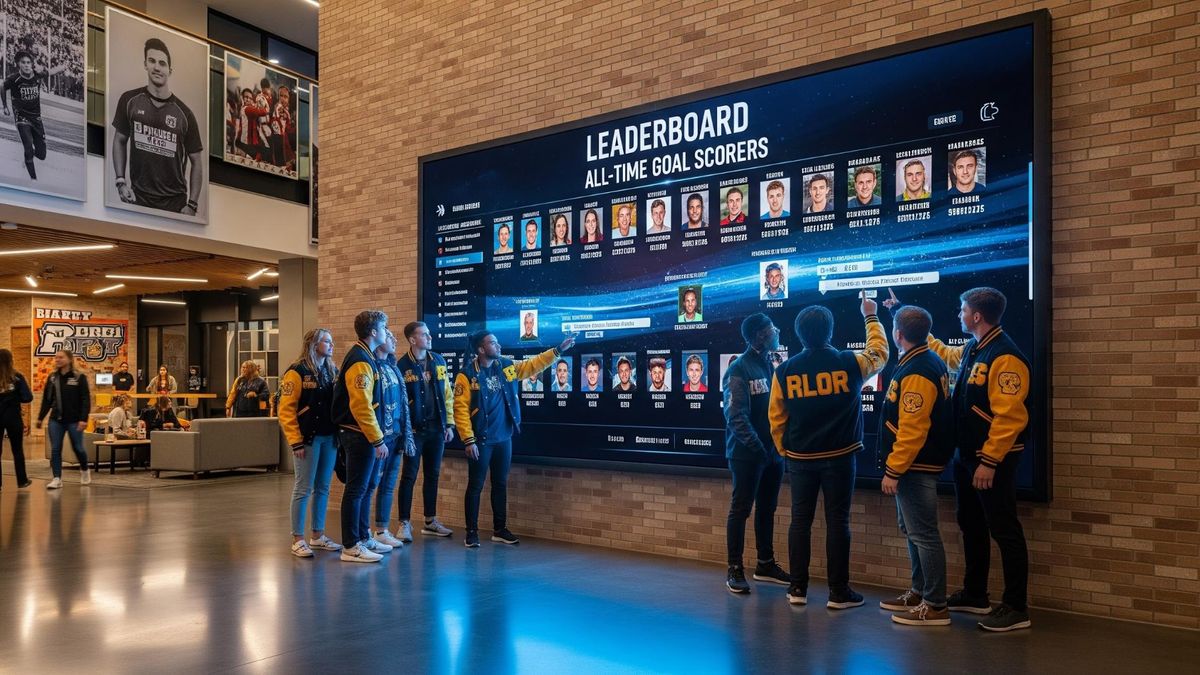
The Power of Goal-Scoring Recognition: All-time goal leaders represent the pinnacle of offensive excellence in athletic programs, embodying years of skill development, dedication, and competitive achievement. From Wayne Gretzky's NHL record of 894 goals to Cristiano Ronaldo's 950+ professional soccer goals, these scoring milestones inspire athletes across generations. Yet many schools, colleges, and youth organizations struggle to properly track, display, and celebrate their own goal-scoring legends—missing powerful opportunities to motivate current athletes while preserving program history.
Goal-scoring records tell compelling stories beyond mere numbers. They chronicle the evolution of athletic programs, document breakthrough performances that elevated entire teams, and provide tangible benchmarks that transform abstract aspirations into focused training objectives. Whether tracking hockey goals, soccer scores, lacrosse tallies, or basketball points, comprehensive recognition of all-time scoring leaders creates lasting legacies that build program culture and inspire excellence.
This comprehensive guide explores everything athletic programs need to know about recognizing all-time goal leaders: essential tracking systems, modern display solutions that eliminate traditional limitations, celebration strategies that create memorable recognition moments, and proven approaches for leveraging goal-scoring achievements to strengthen program identity and motivate future athletes.
Understanding the Significance of All-Time Goal Leaders
Goal-scoring records occupy a special place in athletic achievement, showcasing the excellence of student-athletes within the athletics program.
Why Goal-Scoring Records Matter for Athletic Programs
Creating Tangible Achievement Benchmarks
When a high school sophomore sees that their program’s all-time scoring record stands at 127 career goals, that number transforms from an abstract concept into a concrete target. Athletes can calculate what averaging two goals per game over three seasons would mean for their pursuit of the record. This specificity provides motivation impossible with vague encouragement to “work hard” or “do your best.”
Interactive touchscreen displaying student-athlete achievement cards.
Goal-scoring milestones create hierarchical achievement structures where athletes can pursue multiple levels:
- Program freshman scoring record
- Single-season team-high goals
- Career 50-goal milestone for student-athletes in individual sports.
- All-time top-10 scorers list
- Ultimate program career scoring record
This layered approach ensures athletes at various skill levels find meaningful targets worth pursuing, democratizing excellence while maintaining aspirational ultimate achievements.
Building Program Identity and Tradition
Athletic programs with documented goal-scoring records spanning decades develop strong identities around offensive traditions. Current players understand they’re not simply playing games—they’re contributing to scoring legacies that extend back generations and forward into the future. This connection to tradition creates program cultures where offensive excellence becomes expected, not exceptional.
According to research on athletic program development, schools maintaining comprehensive achievement records report higher athlete retention rates, increased participation in tryouts, and improved competitive performance compared to programs without systematic recognition systems.
Preserving Institutional History
Goal-scoring achievements represent important institutional history worth preserving alongside academic accomplishments. Comprehensive records document how programs evolved, playing styles changed across eras, and individual excellence emerged within team contexts. Without systematic tracking, outstanding performances fade from collective memory within a single generation—a loss of valuable institutional heritage.
The Evolution of Goal-Scoring Across Different Sports
Different sports define and track goals differently, requiring sport-specific approaches to recognition:
Hockey Goal-Scoring Recognition
Hockey programs track both goals and assists comprehensively, with career point totals (goals + assists) often carrying equal prestige to pure goal-scoring records. Programs should recognize:
- Career goals leaders
- Single-season goal records
- Career points leaders (goals + assists)
- Power-play goal specialists
- Game-winning goal achievements
- Hat trick performances (3+ goals in single game)
Soccer Scoring Excellence
Soccer’s lower-scoring nature makes individual goals particularly significant. Recognition categories include:
- Career goals across all competitions
- League/conference-only goal records
- Playoff and tournament goal tallies
- Goals-per-game averages with minimum games threshold
- Assist records for playmakers
- Combined goals and assists totals
Female soccer player action shot with community heroes banner
Lacrosse Scoring Achievements
Lacrosse combines high-scoring action with specialized positions requiring different recognition:
- Attack position career goals for college athletic aspirations.
- Midfielder scoring from two-way positions
- Single-game scoring outbursts
- Tournament performance excellence
- Assist records for facilitators
- Ground balls and caused turnovers for complete player evaluation
Basketball Scoring Records
While technically “points” rather than “goals,” basketball scoring represents parallel achievement deserving similar recognition approaches. Programs implementing comprehensive basketball record systems create models applicable across goal-scoring sports.
Essential Systems for Tracking Goal-Scoring Records
Accurate, comprehensive tracking forms the foundation of effective goal-leader recognition programs. Without reliable data collection and verification, recognition of student-athletes loses credibility and motivational power.
Implementing Robust Data Collection Procedures
Primary Data Source Identification for school athletic programs.
Establish clear hierarchies for record verification:
- Official game scoresheets maintained by statisticians
- Coach-submitted game reports with player statistics
- League or conference official statistics platforms
- State athletic association record books for school athletic programs and student-athletes.
- Media reports from credible sources (newspapers, established websites)
- Video review for disputed performances
- Historical archives and yearbooks for older records
Real-Time Statistics Management
Modern athletic programs benefit from statistics management platforms that capture data during games:
- MaxPreps for high school athletics (widely adopted nationally by athletic departments).
- State athletic association platforms with integrated statistics
- League-specific management systems
- Specialized sport statistics software (GameChanger, Hudl, etc.)
- Team-specific tracking spreadsheets with standardized formats for athletic departments.
These platforms provide several advantages: immediate record identification when broken, season-long tracking with automated cumulative calculations, exportable data for recognition displays, and historical databases enabling year-over-year comparisons.
Verification Standards and Quality Control
Maintain credibility through rigorous verification:
- Require minimum two independent sources for record claims
- Designate specific staff responsible for record verification
- Establish review committees for disputed or unclear achievements
- Document all sources used for verification
- Implement correction procedures when errors are discovered
- Communicate record updates to athletes, families, and communities promptly
Historical Records Research
Many programs lack complete historical data, particularly for achievements from decades past. Comprehensive systems require research reconstructing program history through archived yearbooks, newspaper microfilm, retired coach recollections, alumni contacts, and historical society resources.
Defining Record Categories and Standards
Clear definitions prevent confusion and ensure fair recognition across eras:
Career vs. Season Records
Distinguish between:
- Career Records: Total goals across entire high school or college career (typically 3-4 years varsity competition)
- Season Records: Goals scored in single season (varies by sport: 20-30 games typical)
- Single-Game Records: Most goals in individual contest
Minimum Thresholds for Statistical Records
Prevent statistical anomalies from limited sample sizes:
- Minimum games played (typically 50% of team schedule) for per-game averages
- Minimum goals scored (commonly 10-20) before inclusion in efficiency statistics
- Clarification whether career records count only varsity games or include sub-varsity
Digital display showcasing athlete in arena lobby
Era Adjustments and Context
Acknowledge rule changes affecting scoring:
- Pre- and post-rule change records (three-point line in basketball, overtime rules)
- Different season lengths across decades
- Conference vs. non-conference competition distinctions
- Regular season vs. playoff performance separation
Programs using digital record board solutions can display era-specific records with contextual explanations helping viewers understand historical comparisons.
Modern Display Solutions for Goal-Scoring Recognition
Traditional physical record boards served programs for generations but introduce significant limitations. Modern digital recognition systems for college athletics overcome these constraints while creating enhanced engagement experiences.
Traditional Physical Boards: Benefits and Limitations
- Space Constraints: Physical walls have finite capacity. As programs accumulate goal-scorers over decades, schools face impossible choices: stop adding achievements, remove historical records to accommodate recent scorers, or create cluttered displays where no individual achievement stands out.
- Update Challenges: Every record change requires ordering new materials (plaques, vinyl letters), scheduling installation, and paying for professional services. Simple updates often take 2-4 weeks, meaning championship season achievements for student-athletes may not appear until the following year—missing optimal recognition timing.
- Limited Information Display: Space constraints force minimal information—typically just athlete name, goals scored, and year. Context, career statistics, photos, and personal stories rarely appear despite adding significant inspirational value.
- Physical Deterioration: Traditional boards fade from sunlight, accumulate dust in high-traffic areas, suffer damage from equipment impact, and require periodic refinishing or complete replacement after 10-15 years.
Digital Recognition Systems: Comprehensive Solutions
Digital record boards overcome traditional limitations while creating interactive experiences that transform passive displays into exploration opportunities.
Unlimited Recognition Capacity
Digital systems accommodate thousands of records without physical space constraints. Programs can recognize:
- All-time top 50+ goal scorers (not just top 10)
- Career, season, and single-game records simultaneously
- Multiple sports sharing common display systems
- Both men’s and women’s programs with equal prominence
- Historical and current achievements without competition for space
Instant Updates and Timely Recognition
When an athlete breaks a scoring record during Friday night’s game, displays can be updated by Saturday morning using cloud-based content management accessible from any device. This immediacy means recognition happens while excitement remains high rather than months later.
Touchscreen interface showing athlete portrait cards
Rich Multimedia Profiles
Digital platforms enable comprehensive goal-scorer profiles including:
- Professional photographs and action shots
- Complete career statistics with season-by-season progression
- Video highlights of record-breaking goals and performances
- Written profiles sharing personal stories
- Post-graduation achievements and current status
- Multiple photos showing athlete development over time in their individual sport.
- Coach testimonials and peer recognition
Interactive Exploration Features
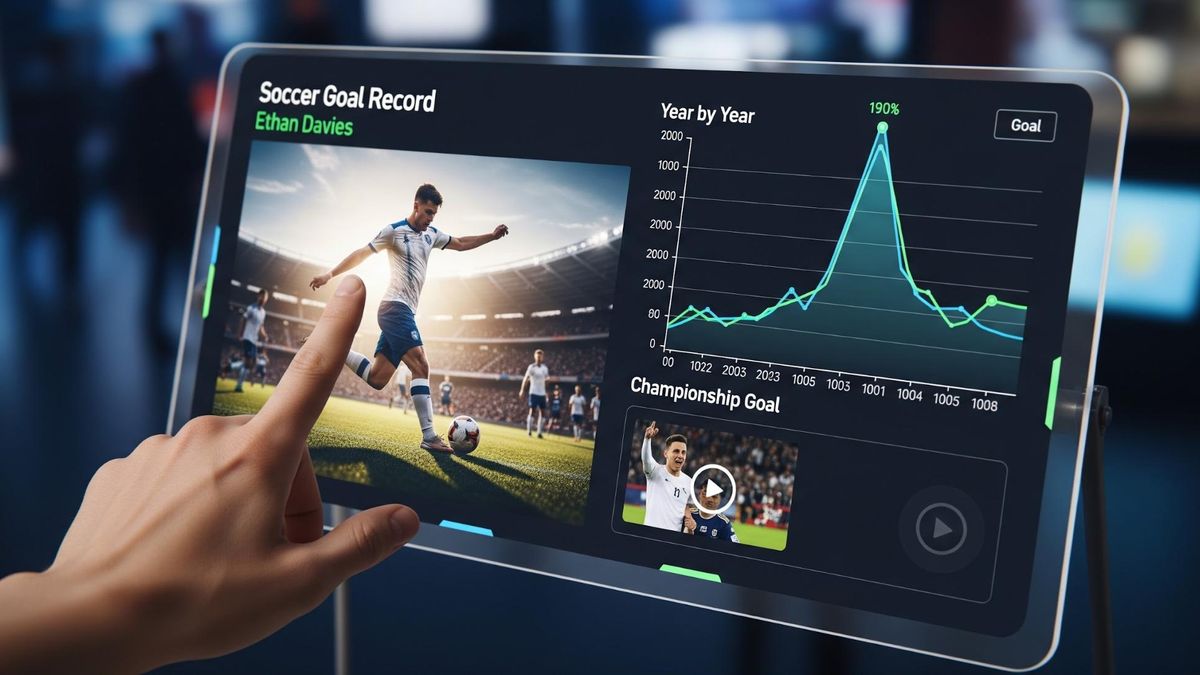
Touchscreen interfaces invite engagement through:
- Search functions finding specific athletes by name or year
- Filtering by sport, gender, era, or achievement type
- Statistical comparison tools contrasting different scorers
- Photo galleries browsing through program history
- Video playback of championship moments
- Detailed breakdowns enabling cross-era analysis
Mobile and Remote Accessibility
Web-based viewing extends recognition beyond physical displays, allowing athletes to share achievements with family through social media while alumni access program information from anywhere worldwide. This extended reach amplifies recognition impact far beyond campus visitors.
Solutions like Touchstone Digital Solutions digital displays provide purpose-built platforms designed specifically for athletic recognition rather than generic digital signage requiring extensive customization.
Comprehensive Recognition Beyond Career Leaders
While all-time career goal leaders deserve prominent recognition, comprehensive programs celebrate diverse scoring achievements ensuring multiple athletes receive acknowledgment.
Multi-Dimensional Goal-Scoring Recognition
Season Excellence Categories
Recognize outstanding single-season performances:
- Season goal-scoring records (most goals in one year)
- Goals-per-game average leaders (minimum games threshold)
- Consecutive games with goals scored
- Multiple-goal game frequency
- Month-by-month or conference-only season records
Game Performance Milestones
Celebrate memorable individual performances:
- Single-game goal-scoring records in individual sports.
- Hat trick achievements (sports-specific thresholds)
- Overtime or playoff game-winning goals
- Goals against ranked opponents or rivals
- Tournament performance excellence
Milestone Achievement Recognition
Beyond absolute records, acknowledge significant accomplishments:
- Career 50-goal milestone
- Career 100-goal milestone (for high-scoring sports)
- First varsity goal scored
- First playoff goal
- Senior season farewell performances
- Awards and all-conference/all-state selections
Student exploring community heroes athletic display
Programs implementing comprehensive student athlete recognition create inclusive cultures where achievements at multiple levels receive appropriate visibility.
Supporting Role Recognition
Goal-scoring doesn’t occur in isolation—recognize student-athletes enabling scoring success:
Assist Leaders
Playmakers deserve equal recognition to goal-scorers:
- Career assist records
- Season assist leaders
- Assists-per-game averages
- Combined goals and assists totals
- Specific recognition for pure facilitators
Defensive and Goalkeeper Excellence
For goal-based sports, recognize defensive achievements:
- Goalkeeper save records and shutouts
- Goals-against averages (GAA)
- Defensive player awards
- Players excelling in two-way play
- Penalty kill or defensive specialist recognition
Team Goal-Scoring Records
Celebrate collective offensive achievements:
- Team single-game scoring records for student-athletes.
- Season team goal totals
- Highest-scoring playoff runs
- Undefeated seasons with dominant offense
- Conference championship offensive statistics
Recognition systems addressing team achievements alongside individual excellence create balanced cultures celebrating both personal accomplishment and collaborative success.
Creating Memorable Recognition Ceremonies
Beyond static displays, schools should create meaningful moments when athletes achieve significant goal-scoring milestones, transforming statistical achievements into emotional experiences.
In-Game and Real-Time Recognition
Immediate Acknowledgment
When goal-scoring records break during competition, immediate recognition amplifies impact:
- Public address announcement as achievement occurs
- Scoreboard graphics displaying new record and previous holder
- Brief stoppage for crowd acknowledgment (if timing appropriate)
- Game ball or commemorative item presentation after contest
- Photo opportunity with coaches and teammates
- Social media posts capturing excitement immediately
- Local media notification for same-day coverage
This immediate validation creates powerful moments athletes remember permanently while excitement remains highest.
Planned Ceremonies at Subsequent Contests
Schedule comprehensive recognition at following home games for student-athletes:
- Family invitation to field/court for public acknowledgment
- Video tribute on scoreboards showing career highlights
- Coach testimonial about athlete’s career and character
- Presentation of commemorative items (signed ball, framed certificate, custom jersey)
- Photo opportunities with program supporters
- Standing ovation from home crowd
- Recognition announcement in distributed game programs
Commemorative Recognition Items
Physical Keepsakes Athletes Treasure
Tangible items create lasting memories:
- Custom game balls inscribed with achievement details
- Engraved plaques or trophies suitable for display
- Framed certificates signed by coaches and administrators
- Commemorative apparel acknowledging specific achievement
- Photo prints from ceremony or action shots
- Championship rings or medallions for team achievements
Modern keepsakes for digital sharing:
- High-resolution photo packages showcasing the athletic experience of student-athletes.
- Professionally edited highlight videos
- Social media graphics for family sharing
- PDF certificates for digital display
- Direct links to permanent athlete profile pages
- Digital badges for college applications or LinkedIn profiles
Programs implementing effective recognition ceremony strategies create cultures where excellence receives consistent celebration rather than isolated acknowledgment.
Leveraging Goal-Scoring Recognition for Program Development
Strategic recognition of goal-scoring achievements delivers benefits extending far beyond honoring individual athletes.
Motivation and Goal-Setting
Creating Concrete Training Objectives
Visible goal-scoring records provide specific targets transforming vague aspirations into focused development plans. Athletes identify current records, calculate required performance levels, and design training regimens targeting record pursuit.
Athlete using interactive touchscreen to explore profiles
Healthy Competition Within Teams
Well-managed recognition creates positive competitive dynamics:
- Teammates pushing each other toward higher performance
- Goal-scoring races adding excitement to seasons
- Multiple athletes achieving personal-best performances
- Friendly rivalries elevating entire position groups
- Celebration of teammate achievements building camaraderie
Recruitment and Program Marketing
Demonstrating Development Success
Comprehensive goal-scoring records provide evidence of program quality:
- Consistent production of high-level scorers
- Development of athletes from varied backgrounds
- Coaching effectiveness in skill development
- Competitive schedule quality enabling record pursuits
- Program culture supporting individual excellence
Recruiting families evaluate programs through visible achievement evidence. Recognition displays provide instantly accessible proof of program effectiveness influencing recruitment decisions.
Alumni Engagement and Fundraising
Goal-scoring recognition maintains alumni connections:
- Notify former athletes when records are featured or broken
- Share display content through alumni communications
- Encourage alumni visits to see achievements celebrated
- Create donation opportunities around recognition enhancements
- Build mentorship connections between record holders and current athletes
Solutions addressing college advancement and donor recognition demonstrate how athletic achievement displays integrate with broader institutional development strategies.
Addressing Common Implementation Challenges
Programs considering comprehensive goal-scoring recognition often encounter similar concerns. Understanding these challenges and their solutions facilitates successful implementation.
“We Don’t Have Complete Historical Records”
Many programs lack comprehensive historical data, particularly for achievements decades past. This common situation shouldn’t prevent program launch:
- Phased Historical Development: Launch with recent records (5-10 years) where data exists, gradually research and add historical achievements, engage alumni in information gathering, accept that some historical gaps may remain permanent, and document research efforts for future reference.
- Establishing “Modern Era” Records: Create explicit “modern era” record categories for college athletics starting from specific years when comprehensive tracking began. This honest approach maintains credibility while acknowledging historical limitations.
“Records Get Broken—Won’t Athletes Feel Bad?”
This concern reflects fundamental misunderstanding of athletic culture. Records are meant to be broken—that’s what makes them meaningful:
- Complete Record Histories: Digital systems maintain complete lineages showing record progression. Previous record holders don’t disappear; “former record holders” sections honor historical achievements, record progression over time tells richer stories, context explanations clarify era differences, and all-time top-10 or top-25 lists recognize multiple excellence levels. Athletes understand record pursuit drives improvement. Former record holders typically celebrate when standards rise, viewing it as program progress within hall of fame programs.
“Digital Systems Are Too Expensive”
While digital displays require higher initial investment than traditional boards, comprehensive cost analysis often favors digital.
Ten-Year Cost Comparison:
- Traditional Board Total Cost:
- Initial fabrication and installation: $4,000-8,000
- Annual updates and maintenance for the athletic department: $500-2,000 × 10 = $5,000-20,000.
- Replacement sections at capacity: $1,000-3,000
- Total: $10,000-31,000 (with limited capacity and delayed updates)
- Digital System Total Cost:
- Initial hardware and software: $6,000-9,000
- Annual software and support: $500-1,200 × 10 = $5,000-12,000
- Total: $11,000-21,000 (with unlimited capacity and instant updates for college athletics).
Digital achieves cost parity within 5-7 years while providing dramatically superior capabilities.
Funding Strategies
Multiple funding sources reduce budget impact:
- Athletic booster club support
- Alumni fundraising campaigns
- Memorial gifts honoring deceased athletes or coaches
- Naming opportunities for major donors
- Grant applications for educational technology
- Budget reallocation from traditional recognition expenses
“Our Staff Lacks Technical Expertise”
Quality digital recognition systems require no more technical skill than using social media.
User-Friendly Content Management
Modern platforms provide:
- Intuitive interfaces resembling Facebook or Instagram
- Upload processes similar to posting photos online
- Simple text editors like Microsoft Word
- Video tutorials and documentation
- Responsive vendor technical support
- Minimal training requirements (typically 1-2 hours)
Many schools find coaches or support staff with no prior technical experience become confident administrators within days.
Case Studies: Goal-Scoring Recognition Success
While specific organizational details must be omitted, general patterns emerge from successful implementations:
High School Soccer Program Transformation
A suburban high school implementing comprehensive digital goal-scoring recognition reported:
- 35% increase in soccer program tryout participation over three years
- First conference championship in program history within two years
- Alumni engagement increasing with five former players returning as volunteer coaches
- Social media following tripling through regular record updates and celebrations
- Three players receiving Division I scholarship offers (previously rare)
The athletic director attributed cultural transformation partly to visible recognition demonstrating that achievement receives lasting acknowledgment.
Youth Hockey Organization Record-Keeping
A regional youth hockey organization (age groups 8-18) implementing digital record tracking across 12 teams experienced:
- Immediate identification of age-group records previously unknown for student-athletes.
- Players setting explicit goals around organizational milestones
- Parent engagement increasing through shareable digital profiles
- Coaching staff using records for development conversations
- Organization branding enhancement through professional recognition displays
Multi-Sport High School Implementation
A comprehensive high school implementing unified recognition across soccer, hockey, lacrosse, and basketball:
- Single display serving multiple sports equitably
- Reduced per-sport cost through shared infrastructure
- Consistent recognition approach creating school-wide culture
- Increased participation across all sports
- Simplified administrative burden through unified content management for the athletic department.
Implementation Roadmap: Getting Started
Successful goal-scoring recognition programs follow systematic implementation approaches:
Phase 1: Planning and Assessment (Months 1-2)
- Needs Analysis: Identify sports requiring goal-scoring recognition, assess current record-keeping systems and data quality, evaluate available budget and funding sources, determine optimal display locations, and establish implementation timeline.
- Technology Selection for the athletics program: Research digital recognition platforms, request vendor demonstrations, compare capabilities, costs, and support, verify compatibility with existing systems, and check references from similar programs.
- Stakeholder Engagement: Present plans to coaches, administrators, and boosters, gather input on recognition priorities, secure necessary approvals and funding, and identify staff responsible for ongoing management.
Phase 2: Data Development (Months 2-4)
- Historical Research: Collect records from available sources, verify accuracy through multiple sources, digitize historical photos and materials, document gaps in historical data, and establish record verification standards.
- Current Season Integration: Implement statistics tracking systems, train coaches on data collection procedures, establish update workflows and schedules for the athletics program, create athlete profile templates, and develop content creation guidelines.
Phase 3: Installation and Launch (Months 4-6)
- Physical Installation: Complete display mounting and setup, configure network connectivity, test all hardware and software, train administrative staff on content management, and load initial content and records.
- Launch Event: Time unveiling with significant game or event, invite athletes, families, and alumni, create ceremonies celebrating both technology and achievements, generate media coverage and social media content, and begin a regular update schedule.
Phase 4: Ongoing Operation
- Regular Maintenance: Update records promptly after each season, add new photos and multimedia content, refresh featured content periodically, respond to corrections or new historical information, and monitor system performance and address issues.
- Continuous Enhancement: Expand historical content over time, add new recognition categories based on feedback, integrate with other school communications, measure impact through engagement metrics, and plan for system upgrades and expansions.
The Future of Goal-Scoring Recognition
Technology continues evolving, creating new possibilities for athletic achievement recognition:
Artificial Intelligence Integration
Emerging AI capabilities will:
- Automatically identify record-breaking performances from statistics feeds
- Generate highlight videos from game footage
- Create written profiles from statistical data and available information
- Suggest content improvements and historical connections
Enhanced Mobile Experiences
Next-generation platforms will provide:
- Companion mobile apps for on-demand record access
- Augmented reality features overlaying information on physical spaces
- Push notifications when records break
- Social sharing integrated seamlessly
- Virtual tours of recognition displays
Advanced Analytics and Insights
Future systems will offer:
- Predictive analytics identifying potential record breakers
- Cross-era statistical comparisons adjusted for rule changes
- Performance trajectory visualization showing athlete development
- Comparative analysis between similar athletes
- Training recommendations based on student-athlete record holder patterns.
Conclusion: Building Legacy Through Goal-Scoring Recognition
All-time goal leaders represent more than statistical achievements—they embody dedication, skill development, competitive excellence, and program tradition. Comprehensive recognition of goal-scoring accomplishments creates tangible connections between past achievements, present excellence, and future aspirations.
Traditional physical record boards served adequately for generations, but modern digital recognition systems dramatically enhance what’s possible. Unlimited capacity enables honoring every achievement worth acknowledging. Instant updates ensure timely celebration. Rich multimedia content tells complete stories beyond statistics. Interactive interfaces invite exploration impossible with static displays.
The most successful goal-scoring recognition programs share common characteristics: they track diverse achievement categories, maintain accurate verified records, present information professionally through appropriate technology, create memorable recognition ceremonies, and leverage achievements strategically to build program culture.
Whether your program focuses on hockey, soccer, lacrosse, basketball, or any goal-scoring sport, whether budget allows comprehensive implementation or requires phased approaches, effective recognition delivers measurable value through enhanced athlete motivation, preserved institutional history, strengthened program identity, improved recruitment, and deeper community connections.
Modern solutions like Touchstone Digital Solutions enable organizations to honor goal-scoring excellence through intuitive digital platforms designed specifically for athletic recognition. These systems combine unlimited recognition capacity with simple content management, creating professional displays that inspire current athletes while preserving program history for future generations.
Stop limiting recognition to what fits on finite wall space. Stop waiting weeks for manual updates to traditional displays. Modern digital goal-scoring recognition provides comprehensive solutions honoring achievement while motivating current and future athletes through visible proof that excellence receives lasting acknowledgment.
Your program’s goal-scoring achievements deserve recognition matching their significance—permanent, professional, powerful, and accessible. Contact Touchstone Digital Solutions today to discover how digital recognition transforms goal-scoring celebration from static displays into engaging experiences that inspire excellence across generations of athletes.